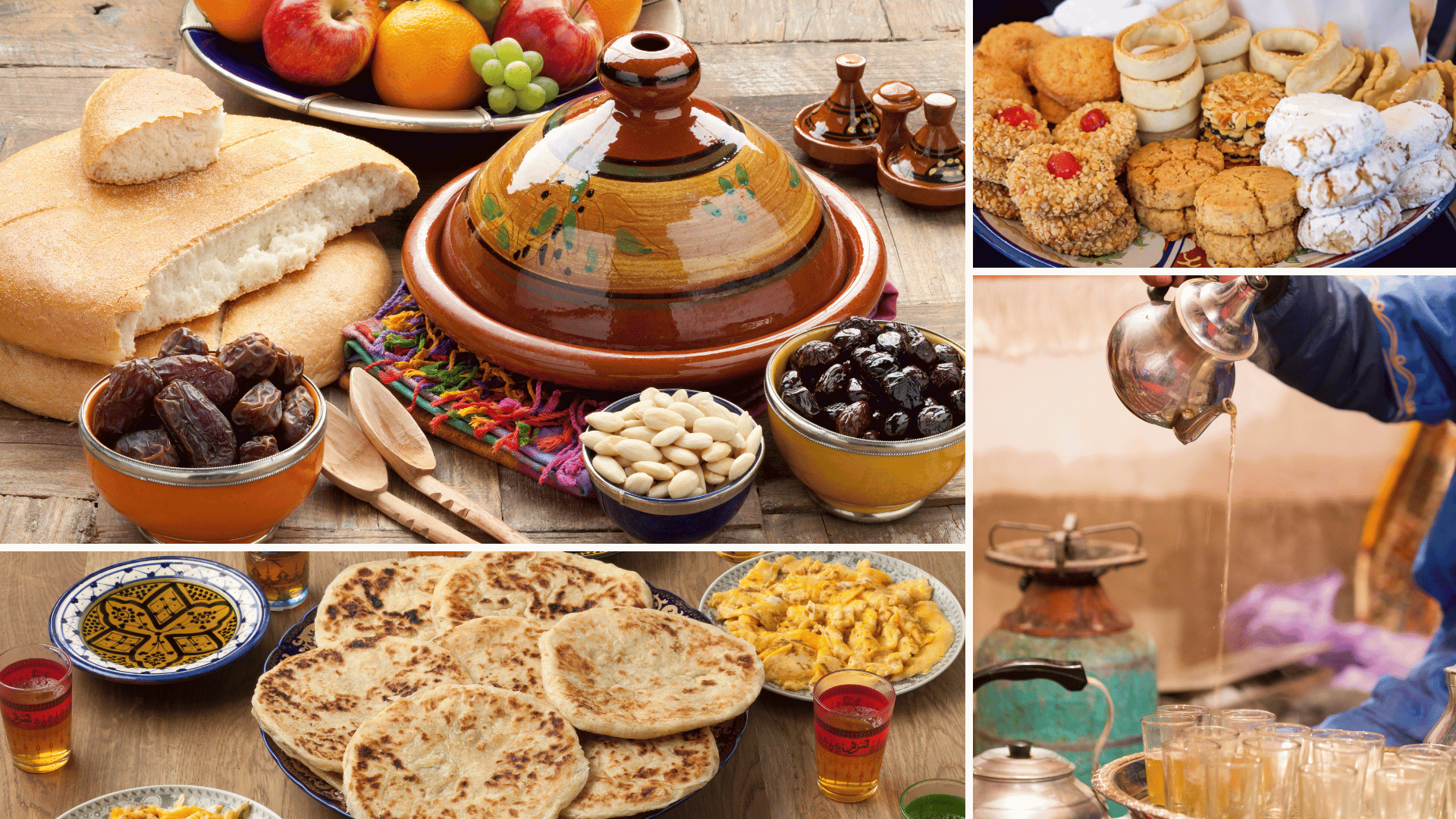
The essential Moroccan dishes
Eight dishes that define the cuisine. Not all available at every restaurant - the starred ones in particular are worth seeking out deliberately.
Street food worth eating
Morocco has excellent street food at remarkable prices. The rule is simple: choose stalls with high turnover and visible cooking. A busy stall that has been frying msemen for two hours is safer and better than a quiet one that has had the same batch sitting.
Square flaky flatbread, folded and pan-fried. Eaten at breakfast with honey and butter or stuffed with minced meat and onion as a snack.
Spongy, honeycomb-textured pancakes made with semolina. Eaten at breakfast, soaked in butter and honey.
Small snails simmered in a broth of herbs and spices - thyme, anise, ginger, licorice root. A Marrakech street food institution at Djemaa el-Fna. Strange to look at, deeply satisfying to eat.
Moroccan doughnuts: ring-shaped, fried, slightly chewy, sold on strings from street carts in the morning. No filling - just oil, flour, and yeast.
Seville orange juice, squeezed in front of you. One of Marrakech's greatest pleasures and best values. Available everywhere.
Half a baguette filled with kefta, fried egg, preserved lemons, olives, and harissa. The breakfast sandwich Morocco does better than most of the world.
Moroccan breakfast
The Moroccan breakfast spread is one of the cuisine's highlights - a table of bread, flatbreads, preserves, and honey that takes 20 minutes to eat and sets you up for a full day in the medina. Most riads serve a generous version of this as part of their room rate.
Round, dense wheat bread baked in communal ovens - the foundation of every Moroccan meal.
Flaky square flatbread, eaten with butter and honey or argan oil. Cooked fresh by hand.
Honeycomb semolina pancakes with hundreds of tiny pores that soak up butter and honey.
A thick paste of argan oil, almond, and honey. The Moroccan version of peanut butter - for dipping khobz.
Sesame and honey pastry, fried and coated in syrup. Found at breakfast and as a snack.
Moroccan mint tea - heavily sweetened green tea poured from height to create foam. Served at every meal and between them.
Drinks in Morocco
Morocco is a Muslim country - alcohol is available but not ubiquitous. It is served in licensed hotel restaurants and bars and in some tourist-facing restaurants in major cities, but the majority of medina restaurants and cafes serve no alcohol. The good news: the non-alcoholic drinks in Morocco are genuinely excellent.
The national ritual. Green tea steeped with a fistful of fresh mint and several spoonfuls of sugar, poured from height into small glasses. Called 'Moroccan whisky' and offered everywhere as an act of hospitality. Refusing it is a social slight worth avoiding. The first pour is water; wait for the second.
The juice stands of Djemaa el-Fna are one of the great cheap pleasures of travel. Seville oranges, squeezed in front of you, for €0.80–1.50. The Seville orange's tartness and sweetness makes this categorically different from carton orange juice.
Thick blended avocado with milk, honey, and sometimes almond milk. One of the most popular drinks in Moroccan juice bars. Rich and filling - more meal than drink.
Coffee prepared with a small amount of argan oil stirred in - a niche local drink found mainly in Souss-Massa region and Agadir. Nutty, rich, and unusual.
Fresh lemon juice with a few drops of rosewater and sugar. Served chilled in some medina cafes and riads. A Moroccan flavour combination that works better than it sounds.
Best food cities in Morocco
Fes el Bali is considered Morocco's culinary heartland. The old city's cuisine is the most historically preserved - pastilla here is closer to the original Andalusian recipe. Try: pastilla, rfissa (shredded msemen with chicken and lentils), lamb mechoui, harira.
The widest range of restaurants - from street carts to high-end riad dining. Best for the full street food experience: Djemaa el-Fna after dark, mechoui alley, fresh juice stands. Try: kefta tagine, mechoui by weight, snail soup.
Essaouira's fishing port delivers remarkably fresh seafood. The port-side grill restaurants let you choose your fish and have it cooked in front of you. Try: whole grilled sea bass, calamari, sardines, shrimp tagine. Best in Morocco for coastal eating.
Chefchaouen's cafe culture is the most relaxed in Morocco - sit in a square, drink mint tea, eat goat cheese with honey and khobz for an hour. Goat milk products (cheese, yoghurt) are local to the Rif mountains. Try: goat cheese, local honey, kefta sandwiches.
What to avoid
Frequently asked questions
What is Morocco's most famous food?+
Morocco's most famous dishes are tagine (slow-cooked stew in a conical clay pot), couscous (steamed semolina served on Fridays with vegetables and meat), and pastilla (a flaky pigeon or chicken pie with almonds and cinnamon). Harira is the national comfort food - a tomato and lentil soup. Mint tea is the national drink.
What is a traditional Moroccan breakfast?+
A traditional Moroccan breakfast includes msemen (flaky square flatbread), beghrir (honeycomb semolina pancakes), khobz (round wheat bread), amlou (argan oil, almond, and honey paste), fresh-squeezed orange juice, and atay (mint tea). Most riads serve a version of this spread as part of the room rate.
Is Moroccan food spicy?+
Moroccan food is aromatic and spiced but not hot-spicy in the chili sense. The flavor profile relies on cumin, coriander, cinnamon, ginger, turmeric, and ras el hanout (a blend of up to 30 spices). Harissa (chili paste) is served as a condiment but is not typically cooked into dishes.
Can vegetarians eat well in Morocco?+
Yes - the cuisine is heavily vegetable-forward. Vegetable tagines, couscous with seven vegetables, harira soup (often meat-free), zaalouk (aubergine dip), taktouka (tomato and pepper salad), briouats, and msemen are all vegetarian. The main issue is that some dishes use meat stock even when not labeled as such - always ask.
What should I avoid eating in Morocco?+
Be cautious with: (1) The Djemaa el-Fna food stalls for a full meal - tourist prices, inconsistent quality. (2) Restaurants directly facing the main squares. (3) Rushed tagines in busy tourist restaurants. (4) Tap water - drink bottled. (5) Ice at street stalls from unknown sources.
What is Moroccan tea?+
Moroccan mint tea (atay) is heavily sweetened green tea steeped with fresh spearmint, poured from height into small glasses to create foam. It is served as an act of hospitality throughout Morocco - in shops, at meals, and between them. Called 'Moroccan whisky,' it is typically very sweet. Refusing it in a social context is considered impolite.
Is couscous really eaten every Friday?+
Yes - Friday couscous is a genuine Moroccan tradition. After Friday prayers, families gather for a large couscous lunch. Many local restaurants in Morocco serve their best couscous specifically on Fridays. If you are in Morocco on a Friday, this is when to seek it out.
Related guides
Planning your trip?
Find tours with local guides who know where to eat.
Ask Travilto about Morocco food →Free to use · Local guide knowledge · Verified operators